I have a not-so-secret secret. In addition to my little business, I am a knitwear designer. Very shortly I'll be adding knitting patterns to my product lineup, focusing initially on socks (because I love them so) but with other garments to follow. Since I operate my business as a business, with the intent of earning money and making a living, the seemingly common attitude by knitting consumers that patterns should be free (and thus by extension have no value) is a matter of concern to me. Intellectual products are as valid, and as valuable, as physical products. So, inspired by today's poignant blog post by Michelle Miller over at Fickle Knitter Design, I thought I'd offer my take on what it costs to produce a knitting pattern specifically, and the basic costs of running a knitting/fiber related business in general.
Direct Costs
Direct costs are those expenses that can be tied directly to the production of an individual product or service. Just like there is a cost for me to make each of my stitch markers, such as for beads, wire, glue, etc., there are direct costs in designing patterns.
Labor. Time and effort are the most obvious cost in producing a pattern. Designers each have their own way of doing things, but in my case, an idea is first sketched and roughly charted in a notebook. Once the idea is sufficiently fleshed out, I chart the design in knitting pattern software. The design gets tweaked, re-tweaked, and re-tweaked again until it's ready for swatching. I knit my own designs first to ensure that the pattern will work. Once I feel that a pattern is ready to be finalized, I grade it if there are multiple sizes (which often requires producing additional charts), and then write up the formal pattern, which includes charts, written instructions, notes, etc.
The design and writing process takes many, many hours of work, with many more additional hours spent swatching and knitting the item. Time is valuable, and the labor put into producing a product (whether a design, or a marker, or a hand-dyed skein of yarn, or....) is valuable. It should not be free.
Materials. Yarn is the next obvious cost in producing a pattern. While some yarn is generously provided by hand dyers and yarn companies, I purchase the majority of the yarn I use in my designs. There may be additional items needed to produce a knitted design, including embellishments such as ribbon, beads, etc.
Services. Several people other than the designer are involved in producing professional knitting patterns. Technical editors are employed to ensure that the information in the pattern is accurate and the written instructions and charts are error-free, and test knitters verify that the pattern is understandable and serve as a double-check that there are no errors. Some designers also use graphic artists to put the pattern into final format. These professionals all charge for their services, and are well worth the cost. Because of them, a designer's idea is turned into a quality product.
Production. Printed patterns of course require paper and ink, and often a plastic sleeve. Designers that print their own patterns use heavy-duty printers (expensive!) and commercial quality inks (expensive!). Some designers use local printing companies, and others use online printing services. Whether done in-house or shopped out to a service, printing costs money. And someone has to stuff the damned pattern into the damned plastic sleeve.
There are costs involved in providing digital (downloadable) patterns as well. Sometimes the patterns need to be reformatted (pixels and all that technical stuff), and depending on the downloading mechanism, there may be delivery costs involved.
Indirect Costs
Indirect costs, also known as overhead, are those expenses incurred in running a business that cannot be directly tied to an individual product or service.
Labor. In addition to the labor involved in making an individual design/product/service, there is a whole lot of time spent in getting that product out to the public and in managing the business. There is bookkeeping to be done, reports and statistics to be run and analyzed (if you want a successful business, that is), sales taxes to be reported and paid, websites to be managed, product pictures to be taken, supplies to be ordered and inventory to be managed, emails to be answered, booths to be staffed, packages to be taken to the post office, etc. etc. and damn et cetera.
In addition to day-to-day business tasks, research and development is a major activity. I spend a lot of time reviewing supply catalogues and going to trade shows, looking for new materials to incorporate into my marker designs. Knitting/fiber magazines and websites are read regularly so that I keep myself informed on what is happening in the fiber world, in terms of new products and vendors, techniques, pricing, trends, etc. I keep up with trade journals so that I know what is happening with LYSs, especially in economic terms, so that I can try to adjust my business as necessary in response. I communicate with other business owners about the latest and greatest whatever to determine if it may benefit my business. And, when required, I spend time monitoring the silver spot market (Seriously! Do you think I ever imagined myself monitoring, let alone even knowing about, the silver spot market?).
Materials. In the case of knitting designs, there are needles, markers and other similar tools of the trade that are used on multiple projects. Good lighting and magnifying lenses may be required, and a decent camera is definitely necessary. A computer and printer are needed, as are professional software programs for bookkeeping, charting, and graphics. For my markers, I use six different types of pliers, several of which require two of each to produce a marker. Jewelry-quality pliers are expensive! Every business has its own requirements, some of which can seem rather odd (baby wipes and toothpicks, anyone?).
Office and General Business Expense. There are the typical paper-pens-and-pencils type of expenses. Then there is the cost of website hosting, gateway fees, business cards, PO boxes, business licenses, and more. A percent of every credit card sale goes to the merchant provider. Since most sales these days, both wholesale and retail, are via credit card, the fees add up.
Space. Knitting can be done on the corner of a couch. But anyone producing at a business level probably needs some dedicated office or studio space. Whether that's an off site rental, an outbuilding, or a section of the garage or dining room, it needs to be equipped, lighted, and heated. If you're in the fiber business, you probably need a water source. You probably need storage space as well -- just my small fiber business alone takes up an entire room. I've been converting an outbuilding to a studio space for my marker business, and have had to install windows for a natural light source so that I can see what I'm doing (expensive!).
Marketing. Would that my wares just sell themselves. But if I want my products to be seen and purchased, I need to market them. Thus there is magazine and online advertising costs, direct mailings to wholesale customers, and attending shows. Show costs include not only booth fees and travel (expensive!), but display supplies such as drapes, table cloths, mannequins, banners, lamps, etc. For wholesale trade shows, there is the cost of printing price lists, membership fees in the trade organization, and more.
Really Indirect Costs, and Other Considerations
There are several different kinds of indirect costs which probably don't apply to most small businesses and the discussion of which is really beyond of the scope of this post. But, some of these expenses are a real cost of doing business. There are also other somewhat intangible things that can affect how successful a small business can be. They are important, and should not be totally overlooked. Below are just two examples.
Cost of Money. The production of a product requires raw materials which sometimes must be purchased in bulk, requiring a huge cash outlay. This cash comes from either business reserves or very often the small business owner's personal funds. The raw materials sit in inventory earning the business no revenue until such time as they can be used and sold. There is an "opportunity cost" to this, in that the expended funds can earn no interest income or be put to other immediate uses. As an example, I previously mentioned monitoring the silver spot market. If I project that the price of silver is going to increase significantly, I will purchase a large quantity of silver components at a lower price. It can take me a long time to use up that inventory, and until I do I am out a big chunk of change.
Know-how. Briefly, "know-how" is an intellectual property term which refers to the expertise and experience an individual brings to a particular task. It has specific connotations in the industrial world, but can be applied to the fiber business as well. Patterns and products do not just spring forth from an untrained mind. And good patterns and products do not spring forth from those who have not put in a lot of time studying, practicing, training, and educating themselves. Gaining knowledge and expertise has a cost, and that knowledge and expertise has intrinsic value.
A good knitting pattern can provide an individual with so much: hours of entertainment, perhaps an introduction to a new style or technique, and the means to a beautiful finished product. That has value, and the creator of the pattern deserves compensation for providing that valuable product.
P.S.
So, um, er, can you tell that maybe I used to be in finance? I can get all fired up about indirect costs. But I really much prefer yarn and stitch markers.

Food. Fiber. &t Cetera.
Tuesday, May 15, 2012
Wednesday, May 2, 2012
April Showers Bring May Flowers
I came home from a week Sock Camp to find that the previous week of solid rain had done its thing -- the yard had erupted in blooms. Spring is in full swing here at Chez Markers a Lot.




Artichokes.

Grapes.

Blueberries.

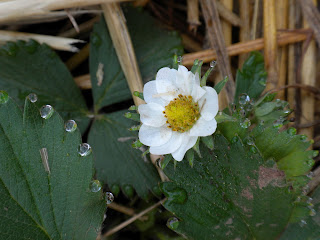
Strawberries.

Wild poppies, in the veggie beds where they don't belong.

Iris.

Lily of the Valley.
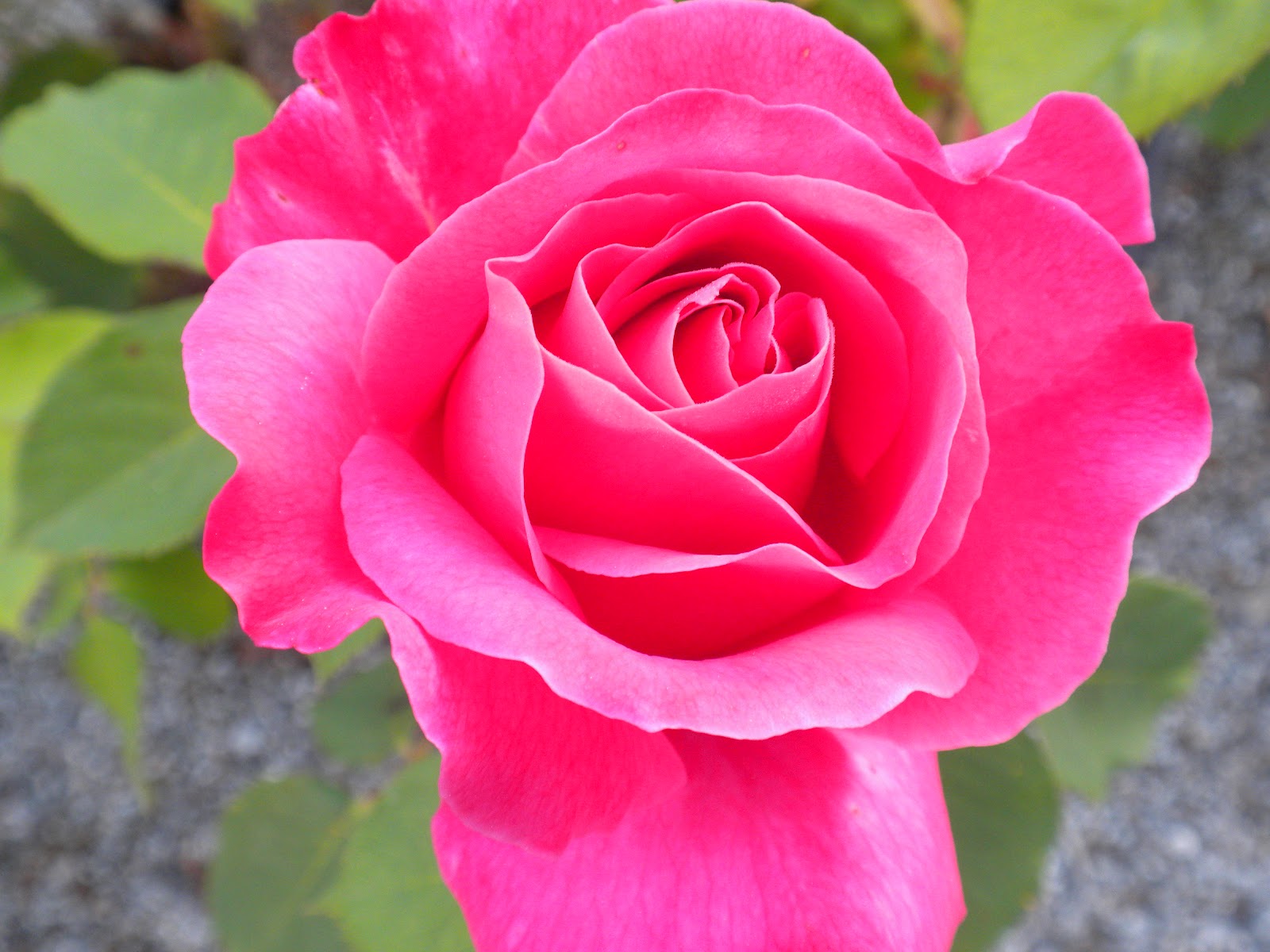
Roses.

Haven't a clue.
Wednesday, April 25, 2012
Sock Camp 2012
What goes on at Sock Camp, stays at Sock Camp. So I ain't sayin' nuthin'. Except that there may have been some or all of the following at Port Ludlow this past weekend:


 a misty morning in the Marina


a Depraved Dyer

a Yarn Harlot

a couple of cool Matey's
(Notice the yarn for Color Affliction. I mean Affection.)

a beautiful day on the water


a whole lotta smooshing going on

yarn dying

yarn bombing
(I admit to nothing.)

a ponytail dip
Saturday, March 17, 2012
20 Year Newlyweds
Twenty years ago today, John and I ran off to Carmel Valley and got married. It was the third anniversary of our first date, so we decided to go with the St. Patrick's Day theme, and give a nod to our heritage as well. John wore a green tie, and I had a little handkerchief embroidered with green shamrocks. We even found a minister by the name of Pat O'Brien (seriously!) to marry us.


March 17, 1992
Recently, a nice older gentleman we had just met asked us if we were newlyweds. We chuckled, and replied that it just felt like it.
Happy 20th, John. I love you.
Friday, March 9, 2012
Surprises
When moving into a new home, surprises are generally not a good thing: They are signs that something is broken and it's going to cost you a boatload to repair (the shower stall sinking through the subfloor immediately comes to mind).
Sometimes, though, you can be pleasantly surprised. With spring right around the corner, our new yard is sprouting all kinds of surprises.


Sometimes, though, you can be pleasantly surprised. With spring right around the corner, our new yard is sprouting all kinds of surprises.

Daffodils are popping up everywhere. So many of them! I just adore daffodils. Besides being a harbinger of spring, is there a more cheery flower?

Clusters of Paperwhites at the base of a big oak tree. So pretty in the dappled sunlight.

Violets! I haven't seen these since I left New England a loooooooong time ago.

This plant appears to be growing out of the side of a dead log, but the roots are actually in the ground. I've no idea what it is, and there is only one.

I don't know what this is either, but the vibrancy of the pink and yellow is amazing.
Friday, January 27, 2012
PTSD (Post TNNA Stress Disorder)
I love showing at TNNA. Not only is there the opportunity to meet up with friends and customers (both old and new), but you have the chance to see and touch up-close and personal all the new yarns and gadgets and books and dyers and designers. (Well, maybe you don't actually get to touch the dyers and designers, but hey.) It can actually be somewhat overstimulating; I come home with my brain on overdrive, full of inspiration and ideas. Then of course there are the orders to fill, and the inventory to make for the next upcoming show (in this case, Stitches West), the follow-up contacts to be made, etc etc etc. It takes a week or three before I can sleep regularly again and get back to a normal schedule. It's a stressful time, but in a good way.
For some reason I tend to come down with a serious case of camnesia whenever I attend TNNA; this winter's show in Phoenix was no different -- I lugged my camera everywhere but neglected to snap a single pic. But I can tell you about just a few of some of the great folks met and lovely goodies procured at the show.
I roomed with my pal Michelle of Fickle Knitter Design. We had a good time, and there may have been some chile mac-and-cheese and tequila and wine consumed. I finally got to meet the charming Roxanne of Zen Yarn Garden. Her booth was near mine, and I kept sneaking over to fondle her wares. Mmmmm. I'll be working with her yarn in the near future, for sure. I also got to meet Mira Cole of Baah Yarns, a new vendor at TNNA. A skein of her superwash merino fingering weight yarn in the saturated Blue Sapphire colorway came home with me; I'm using it for a new pattern I'm working on (so far so good on both fronts).
A couple of gadgets also came home with me: The Stitch Light and Yarn Cozies by Buffy Ann Designs. These are items that I didn't know I needed, and boy are they coming in handy. The Stitch Light hangs from a strap around your neck and provides a bright white spotlight. My new studio is surrounded by tall trees so the natural light I like to work with is limited. I gave the Stitch Light a test drive this morning, and it provided just the right illumination I needed when I was working with fine gauge wire. I'm becoming rather enamoured of the Yarn Cozies as well. I normally work with yarn cakes and thus hadn't seen a huge need for a cozy, but with multiple cats (plural) in the household I'm finding that the Cozy not only keeps the yarn on the outside of the cake well in place, it also protects it from acquiring the inevitable coating of cat hair. I'm told that Cozies shaped for pull skeins are in the works and will be released soon. Thanks to Larry and Buffy Ann for letting me give these a whirl.
Speaking of my new studio, it's finally finished and I began moving in this week. It's spacious, full of windows, and painted in a bright chartreuse that's sure to keep me going. I even found the perfect rug for the space. Once TNNA orders are filled, I'll be setting up the other half of the building to use for fiber production. My drum carder is calling me.


For some reason I tend to come down with a serious case of camnesia whenever I attend TNNA; this winter's show in Phoenix was no different -- I lugged my camera everywhere but neglected to snap a single pic. But I can tell you about just a few of some of the great folks met and lovely goodies procured at the show.
I roomed with my pal Michelle of Fickle Knitter Design. We had a good time, and there may have been some chile mac-and-cheese and tequila and wine consumed. I finally got to meet the charming Roxanne of Zen Yarn Garden. Her booth was near mine, and I kept sneaking over to fondle her wares. Mmmmm. I'll be working with her yarn in the near future, for sure. I also got to meet Mira Cole of Baah Yarns, a new vendor at TNNA. A skein of her superwash merino fingering weight yarn in the saturated Blue Sapphire colorway came home with me; I'm using it for a new pattern I'm working on (so far so good on both fronts).
A couple of gadgets also came home with me: The Stitch Light and Yarn Cozies by Buffy Ann Designs. These are items that I didn't know I needed, and boy are they coming in handy. The Stitch Light hangs from a strap around your neck and provides a bright white spotlight. My new studio is surrounded by tall trees so the natural light I like to work with is limited. I gave the Stitch Light a test drive this morning, and it provided just the right illumination I needed when I was working with fine gauge wire. I'm becoming rather enamoured of the Yarn Cozies as well. I normally work with yarn cakes and thus hadn't seen a huge need for a cozy, but with multiple cats (plural) in the household I'm finding that the Cozy not only keeps the yarn on the outside of the cake well in place, it also protects it from acquiring the inevitable coating of cat hair. I'm told that Cozies shaped for pull skeins are in the works and will be released soon. Thanks to Larry and Buffy Ann for letting me give these a whirl.
Speaking of my new studio, it's finally finished and I began moving in this week. It's spacious, full of windows, and painted in a bright chartreuse that's sure to keep me going. I even found the perfect rug for the space. Once TNNA orders are filled, I'll be setting up the other half of the building to use for fiber production. My drum carder is calling me.


Tuesday, December 27, 2011
A Quilt Story
During a lovely holiday visit to John's family, my mother-in-law, Sally, asked if I might be interested in an old quilt. I followed her down to a back bedroom, where she pulled out of the closet a pretty spread done in soft colors against a creamy white background. It was made in the 1930's and was still in remarkably good shape. Sally said she didn't know if I would really want it, and I shouldn't feel that I had to take it (she's so cool). I thought perhaps screaming HELL YEAH! at my mother-in-law would be a bit inappropriate, so I managed to mumble what I hope was a respectful yet enthusiastic, "Yes, I would really like to have this."
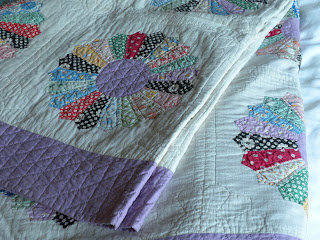

This entirely hand-quilted piece was made by Shelley Stevens, a woman who used to babysit John and his siblings when they were very young. Shelley was born ca. 1905 and passed away many years ago. Her sister, when disposing of some of Shelley's personal affects, was going to put the quilt out in a yard sale for $2. TWO DOLLARS!!! My MIL couldn't bear that it be subjected to such an uncertain fate, and so brought it home (see, I told you she was cool) and has taken good care of it.


The pattern seems familiar to both Sally and I, but we couldn't quite put our fingers on the name of it. Sally isn't certain, but suspects that the fabric came from a quilting kit put out by Sears in the 1930's. I'll need to do a little research on the quilt's background.

When the weather turns warm, the quilt will grace our bed. Until then, it's tucked away in my closet, safe from the ravages of time and three cats.
Shelley, if you're out there somewhere, you are fondly remembered, and your quilt lives on.
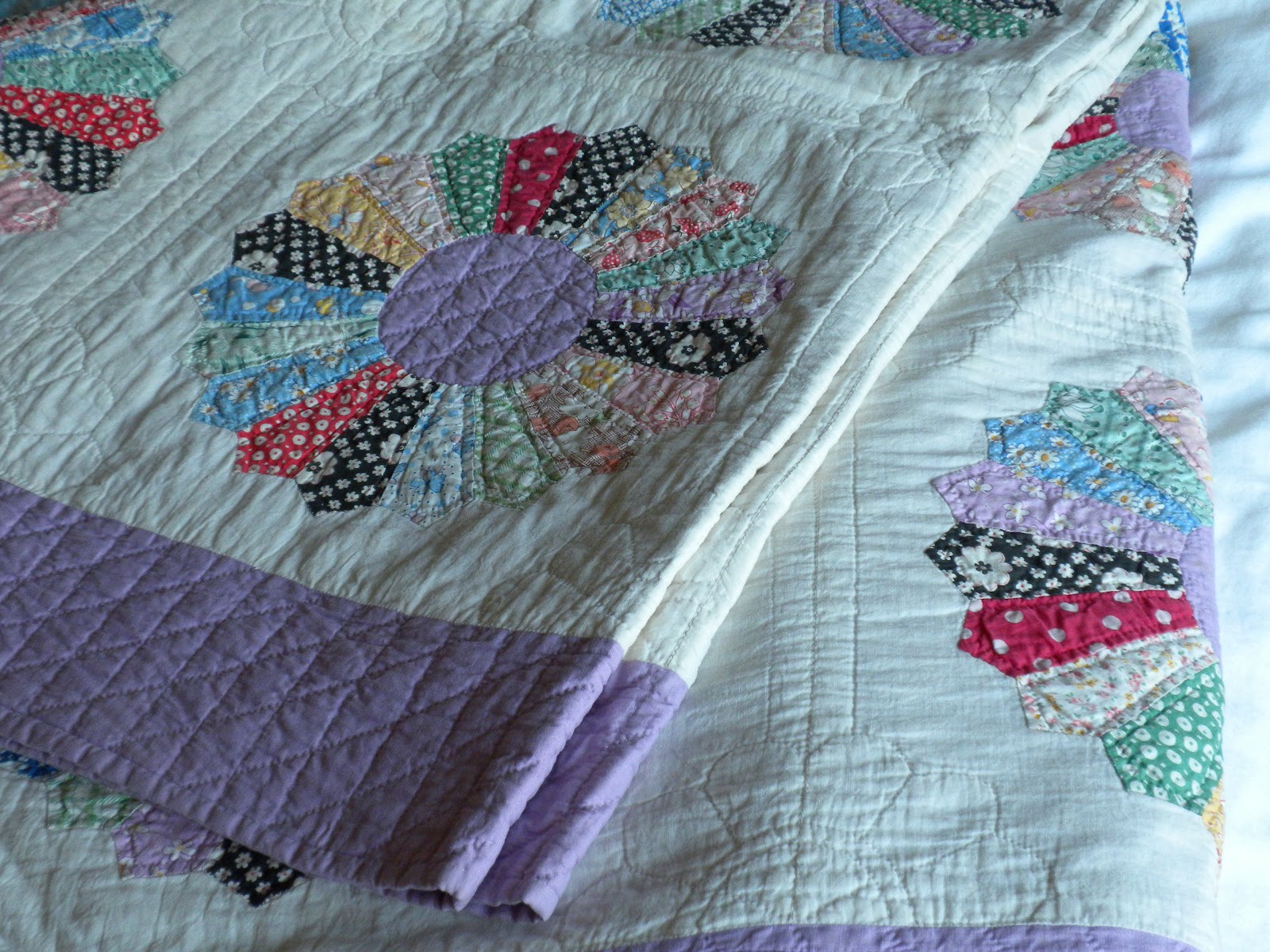

This entirely hand-quilted piece was made by Shelley Stevens, a woman who used to babysit John and his siblings when they were very young. Shelley was born ca. 1905 and passed away many years ago. Her sister, when disposing of some of Shelley's personal affects, was going to put the quilt out in a yard sale for $2. TWO DOLLARS!!! My MIL couldn't bear that it be subjected to such an uncertain fate, and so brought it home (see, I told you she was cool) and has taken good care of it.


The pattern seems familiar to both Sally and I, but we couldn't quite put our fingers on the name of it. Sally isn't certain, but suspects that the fabric came from a quilting kit put out by Sears in the 1930's. I'll need to do a little research on the quilt's background.

When the weather turns warm, the quilt will grace our bed. Until then, it's tucked away in my closet, safe from the ravages of time and three cats.
Shelley, if you're out there somewhere, you are fondly remembered, and your quilt lives on.
Subscribe to:
Posts (Atom)